
Final Synthesis Design Studio 19
Professors
Politecnico di Milano
Politecnico di Milano
Prof. in Visual Communication
Salvatore Zingale
Prof. in Semiotics
Politecnico di Milano
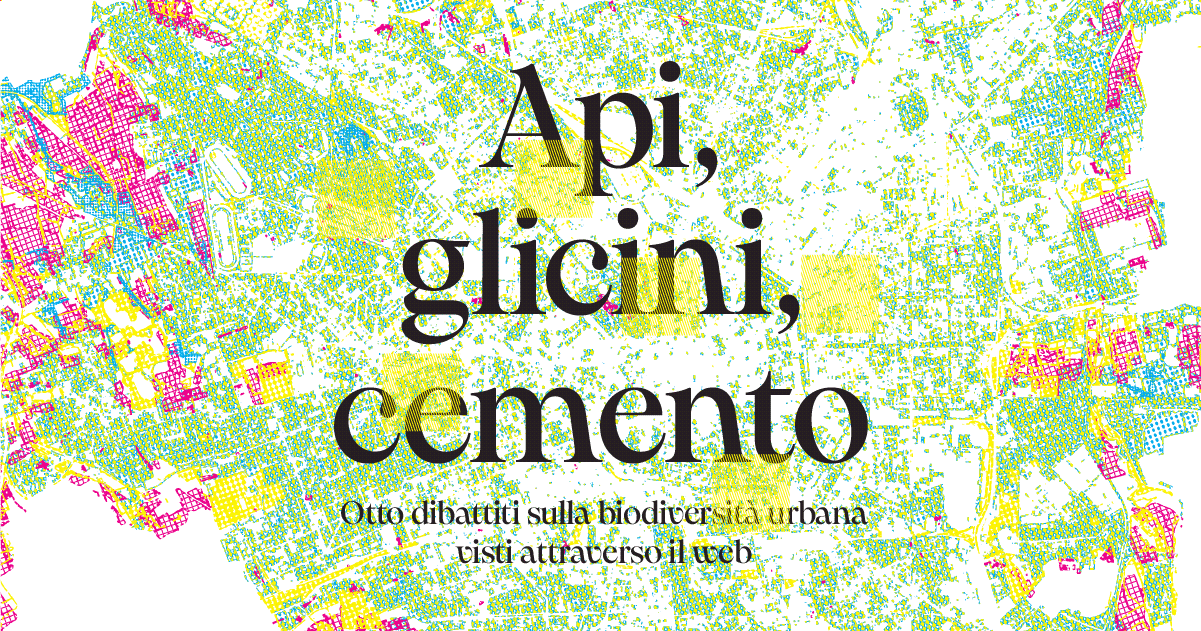
The 2023/2024 edition of the Final Synthesis Design Studio focused on exploring urban biodiversity through data visualization, digital methods, and communication design. Students investigated eight local controversies in Milan, examining the tensions between urban development, environmental protection, and the different perspectives of the communities involved.
The course followed a three-phase approach. Students first explored the principles and techniques of data visualization through the design of diagrams and visual explanations. They then applied digital methods to investigate debates surrounding urban biodiversity, collecting and analyzing online data from different platforms and sources. Their findings were organized into printed data-driven catalogues, designed to encourage slow engagement with data and reveal the nuances of each controversy. In the final phase, students translated their research into physical and audiovisual installations, experimenting with different forms of data representation to engage broader audiences.
The final projects were presented in Api, Glicini, Cemento, a public exhibition held at the MEET Digital Culture Center in Milan from February 21 to March 3, 2024, promoted by the National Biodiversity Future Center. The exhibition brought together eight installations exploring how urban biodiversity is discussed, contested, and represented online.
Throughout the course, visualization was approached not only as a tool for analyzing and communicating data, but also as a means of making different perspectives visible and creating opportunities for public engagement with complex local issues.
Student outputs
The main results of the course are documented on the Api, Glicini, Cemento exhibition website, which presents the eight projects, their research processes, data catalogues, and final installations.
- Data Visualization: Diagrams and visual explanations introducing the principles and techniques of data representation.
- Data as Artefact: Printed data-driven catalogues investigating eight controversies surrounding urban biodiversity through digital methods and online data.
- Data Publics: Physical and audiovisual installations translating research findings into public-facing experiences, presented in the Api, Glicini, Cemento exhibition.