
Final Synthesis Design Studio 17
Professors
Politecnico di Milano
Simone Vantini
Prof. in Mathematics
Politecnico di Milano - Department of Matematics
Prof. in Visual Communication
Politecnico di Milano
Salvatore Zingale
Prof. in Semiotics
Politecnico di Milano
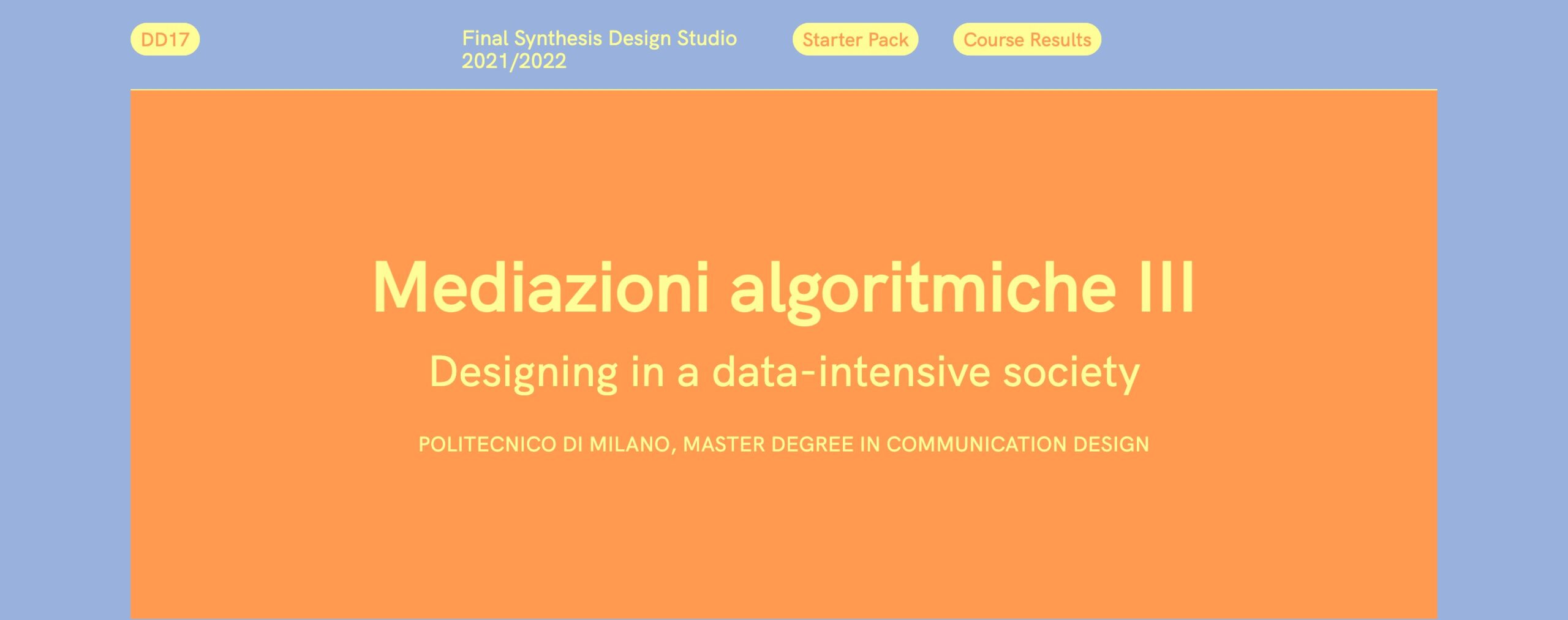
The 2021/2022 edition of the Final Synthesis Design Studio focused on exploring complex social and cultural phenomena through data visualization and communication design, with particular attention to the role of algorithms and digital platforms in shaping contemporary society. Students investigated topics such as online misinformation, digital activism, alternative social media, blockchain technologies, and the influence of digital platforms on everyday life.
The course followed a three-phase approach, introducing a new focus on the visual explanation of statistical and algorithmic methods. Students first explored how data is produced and processed, designing posters that explained the functioning, strengths, and limitations of different statistical algorithms. They then applied digital methods to investigate specific online phenomena, producing printed research reports based on data collected from digital platforms. In the final phase, students transformed their findings into interactive websites designed to communicate their perspectives, engage specific audiences, and encourage critical reflection.
Throughout the course, visualization was approached both as a tool for understanding how data and algorithms shape knowledge and as a means of investigating complex phenomena and communicating research findings to different publics.
Student outputs
All student projects are documented on the 2021/2022 course website, organized into three phases:
- Visual Explanations: Printed posters explaining statistical and algorithmic methods, their underlying principles, strengths, and limitations.
- Data as Artefact: Printed research reports using digital methods to investigate online phenomena, platform dynamics, and contemporary controversies.
- Data Publics: Interactive websites translating research findings into public-facing narratives, encouraging reflection and engagement with the issues explored.